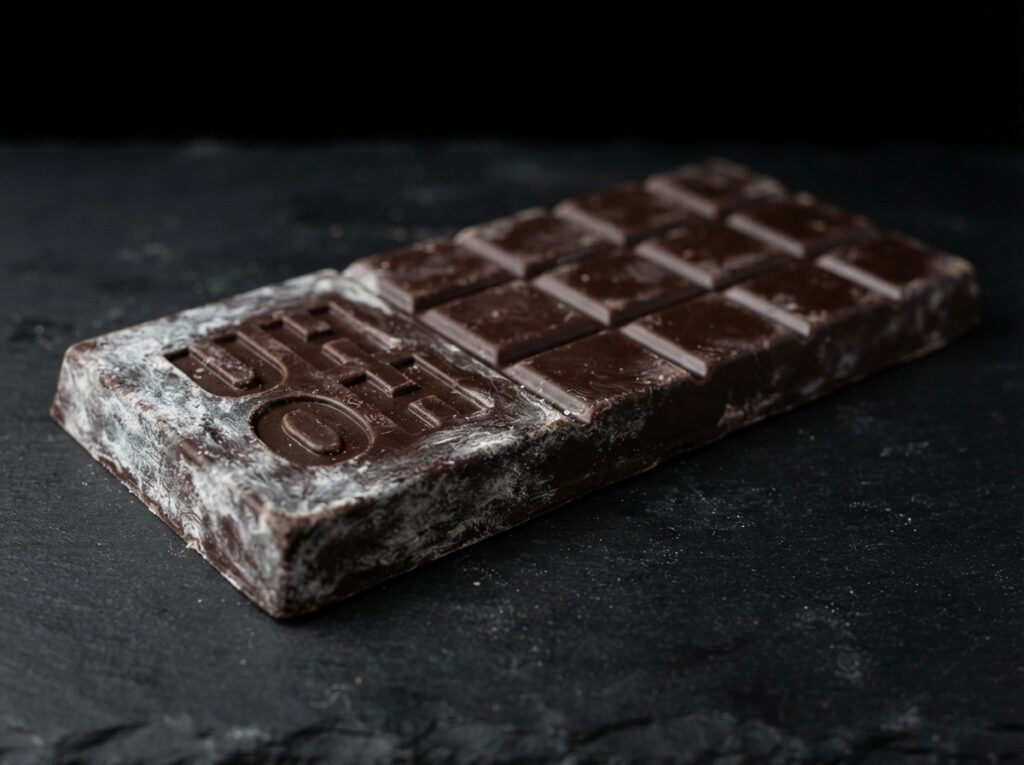
When you reach into the back of the pantry, pull out a long-forgotten bar of dark chocolate, and find it coated in a ghostly, grayish-white film, your first instinct is to toss it in the trash. It looks like mold, but that dusty appearance is completely harmless. Known as “blooming,” this natural physical reaction simply means your chocolate has a story to tell about its storage environment.
Fat vs. Sugar Bloom: What’s Really Going On?
That white haze is almost always one of two distinct phenomena:
-
Fat Bloom (The Heat Effect): Caused by fluctuating temperatures. When cocoa butter warms up and re-solidifies, it separates from the other ingredients and migrates to the surface, leaving behind dull white streaks or spots.
-
Sugar Bloom (The Moisture Effect): Triggered by humidity or sudden temperature shifts (like moving chocolate straight from a cold fridge into a warm room). Condensation dissolves the sugar on the surface, and as the moisture evaporates, it leaves behind a layer of white sugar crystals.
A quick touch test will tell you which one you’re dealing with: fat bloom feels slick and smooth, while sugar bloom feels gritty and rough.
Is It Mold? (Spoiler: No)
Neither condition is mold. Fungal growth requires moisture to thrive, and chocolate—a low-moisture, high-fat environment—is hostile to mold. A bloomed bar might look like it survived a tiny snowstorm, but it is 100% safe to eat. Severe bloom might slightly alter the texture or mute the flavor, but it poses zero risk to your stomach.
How to Restore or Repurpose Bloomed Chocolate
You don’t have to suffer through a chalky texture just to avoid wasting good chocolate. Here are three easy ways to bring it back to life:
-
Melt & Reset It: Chop the chocolate evenly and melt it slowly using a double boiler or short microwave bursts. Heating it resets the cocoa butter structure, restoring that smooth, glossy finish for dipping fruit or pouring into molds.
-
Bake It Into Desserts: If sugar bloom left the bar feeling grainy, use it in recipes where texture gets melted away anyway. It is a culinary goldmine for rich ganaches, fudgy brownies, or silky mousses.
-
Turn It Into Hot Cocoa: Grate the bloomed chocolate straight into a saucepan of steaming milk. The heat and whisking instantly erase any trace of bloom, leaving you with a rich, decadent hot chocolate.
Next time you spot a dusty bar in your cupboard, don’t let the “white powder” trick you into throwing away a perfectly good treat. Once you realize blooming is purely cosmetic, you can reclaim your pantry stash with total confidence.