
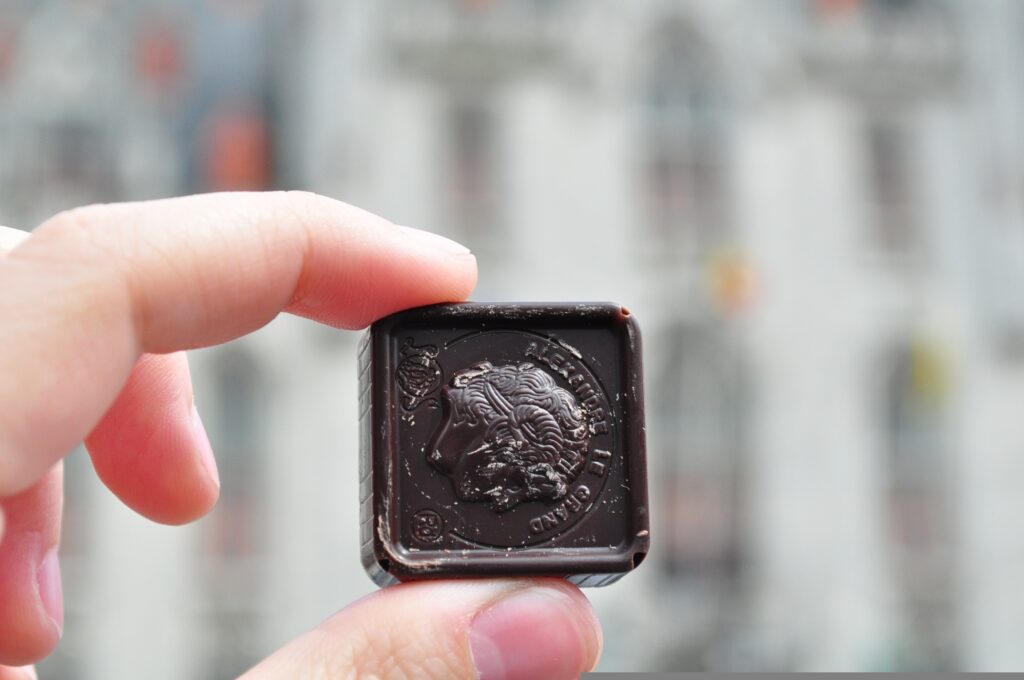
The Fascinating Journey of Chocolate in Medieval Europe
The history of chocolate is a rich tapestry woven with stories of exploration, innovation, and cultural transformation. Its journey from the verdant tropics of the Americas to the grand courts and bustling markets of medieval Europe is a tale that intertwines with the broader narrative of global exchange during a time of profound change. This article delves into the fascinating journey of chocolate as it traversed the complex social and economic landscapes of medieval Europe, forever altering tastes and traditions.
The Origins of Chocolate
Chocolate’s story begins long before its European debut, in the ancient civilizations of Mesoamerica. The Olmecs, Mayans, and Aztecs all held the cacao bean in high esteem, incorporating it into religious rituals and social ceremonies. The Mayans, for instance, revered cacao as a divine gift and consumed it as a frothy, bitter beverage often spiced with chili peppers and flavored with vanilla. Later, the Aztecs adopted similar practices, believing that cacao was a gift from their god Quetzalcoatl. They used it as both a form of currency and a drink reserved for the elite.
Chocolate’s Introduction to Europe
The introduction of chocolate to Europe is closely tied to the era of exploration and conquest that began in the late 15th century. Christopher Columbus is often credited with being one of the first Europeans to encounter cacao during his fourth voyage to the New World in 1502. However, it was Hernán Cortés, the Spanish conquistador, who truly recognized the value of cacao. After conquering the Aztec Empire in 1521, he sent shipments of cacao beans back to Spain, along with instructions on how to prepare the beverage.
Initially, chocolate did not immediately capture the European palate, likely due to its unfamiliar bitterness. However, as sugar began to be added to the mix, chocolate’s appeal broadened. By the late 16th century, chocolate had become a fashionable drink among Spanish nobility, often enjoyed in lavish social settings. The Spanish kept the secret of chocolate to themselves for several decades, but it was inevitable that this luxury would spread across Europe.
Chocolate Spreads Across Europe
By the 17th century, chocolate had begun to make its way beyond Spain’s borders. The marriage of Spanish princess Maria Theresa to Louis XIV of France in 1660 significantly boosted the popularity of chocolate in the French court. There, it was consumed as a beverage, often flavored with spices such as cinnamon and vanilla, and was considered both a delicacy and a medicinal remedy.
In Italy, chocolate’s arrival was marked by the establishment of the first chocolate house in Florence in 1606. The Italian elite quickly adopted the drink, and it became a staple at the Medici court, where it was thought to have both aphrodisiac and restorative properties. The drink’s popularity soon spread to other parts of Europe, including the Netherlands and England, where the first chocolate house, ‘The Coffee Mill and Tobacco Roll,’ opened in London in 1657.
Chocolate Houses and European Society
Chocolate houses became cultural hubs in many European cities, akin to coffee houses but often more exclusive. These establishments were frequented by the upper classes, who gathered to enjoy chocolate while discussing politics, philosophy, and the arts. In England, these chocolate houses played a significant role in the social and political life of the time, serving as meeting places for influential figures and even spawning several famous clubs, such as White’s and Brooks’s.
The exclusivity of chocolate in medieval Europe was closely linked to its cost. The production and importation of cacao beans were expensive, making chocolate a luxury item that only the wealthy could afford. The intricate process of preparing chocolate, which involved grinding cacao beans and mixing them with sugar and spices, further added to its allure as a status symbol.
Cultural and Medicinal Perceptions of Chocolate
Chocolate was not just a culinary indulgence; it was also imbued with cultural and medicinal significance. In many parts of Europe, it was considered a tonic with health benefits. Physicians of the time often prescribed it as a remedy for various ailments, ranging from digestive issues to fatigue. The belief in its medicinal properties was partly inherited from Mesoamerican traditions, where cacao was used in healing rituals.
The cultural perception of chocolate also evolved over time. Initially seen as an exotic luxury, it gradually became a symbol of sophistication and refinement. Its association with the upper echelons of society contributed to its mystique, and it was often featured in the art and literature of the period. This romanticized view of chocolate helped cement its place in European culture, paving the way for its enduring popularity.
Technological Advancements and Chocolate Production
The production of chocolate in medieval Europe was labor-intensive and time-consuming. However, technological advancements gradually improved the process. The invention of the hydraulic press in the early 19th century, although outside the medieval period, was a significant milestone that would later revolutionize chocolate production by allowing for the separation of cocoa butter from cocoa solids, leading to the creation of solid chocolate.
During the medieval period, however, chocolate remained primarily a drink. The preparation involved roasting and grinding cacao beans, then mixing them with hot water, sugar, and spices. This process required skill and precision, and the resulting beverage was a testament to the craftsmanship of those who prepared it. The artisanal nature of chocolate production contributed to its status as a luxury item and reinforced its association with the elite.
The Legacy of Chocolate in Medieval Europe
The journey of chocolate in medieval Europe is a story of adaptation and transformation. From its origins as a sacred Mesoamerican beverage to its role as a fashionable drink among European nobility, chocolate’s trajectory is a reflection of the broader currents of cultural exchange and economic change that characterized the period. Its impact on European society was profound, influencing social practices, economic trade, and even the arts.
The legacy of chocolate in medieval Europe is evident in its continued popularity and the rich cultural traditions that have grown up around it. Today, chocolate is enjoyed in myriad forms, from artisanal confections to mass-produced treats, and its journey from the Americas to Europe remains a testament to the enduring appeal of this remarkable substance. As we savor a piece of chocolate or sip a cup of cocoa, we are partaking in a tradition that spans centuries and continents, a delicious reminder of the fascinating journey that brought chocolate to the world.
#ChatGPT assisted in the creation of this article.