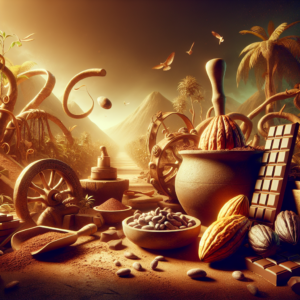
Chocolate, the sweet indulgence that has captivated humanity for centuries, is far more than just a treat. It is a symbol rich with history, culture, and meaning. From its origins in ancient Mesoamerica to its status as a modern-day luxury, chocolate has evolved into a global phenomenon that transcends borders and generations. This article embarks on a journey to decode the symbolism of chocolate, exploring its significance across different cultures and historical contexts.
Ancient Beginnings: Chocolate in Mesoamerican Cultures
The history of chocolate begins with the ancient civilizations of Mesoamerica, where the cacao tree was first cultivated. The Mayans and Aztecs revered cacao as a divine gift, incorporating it into religious rituals and daily life. Cacao beans were so valuable that they were used as currency. The Mayans believed that cacao was discovered by the gods in a mountain and given to humanity as a source of wisdom and vitality.
For the Aztecs, chocolate was a symbol of power and prestige. The famed Aztec ruler Montezuma II is said to have consumed copious amounts of a frothy chocolate beverage, flavored with spices and chili, to boost his energy and virility. Drinking chocolate was reserved for the elite, and its preparation was considered an art form.
The European Encounter: Chocolate as a Symbol of Luxury and Status
When Spanish explorers arrived in the New World, they encountered chocolate and were intrigued by its unique flavor and energizing properties. Upon their return to Europe, they introduced chocolate to the continent, where it quickly became a sensation among the aristocracy. In the courts of Spain, France, and beyond, chocolate was a luxury item, its consumption a marker of wealth and sophistication.
The symbolism of chocolate in Europe shifted from a sacred drink to a symbol of indulgence and opulence. The European elite adapted the Mesoamerican preparation methods, adding sugar, vanilla, and milk to create the sweetened versions we are familiar with today. Chocolate houses emerged as social centers where the wealthy gathered to enjoy this exotic delicacy and engage in intellectual and political discourse.
Chocolate and Romance: A Symbol of Love and Affection
As chocolate became more accessible, its symbolism evolved to encompass notions of love and romance. The connection between chocolate and love is deeply ingrained in popular culture, often associated with Valentine’s Day and other romantic occasions. This symbolism likely stems from chocolate’s reputation as an aphrodisiac, a belief that dates back to its early use by the Aztecs.
In the Victorian era, gifting chocolate became a popular way to express affection. The advent of heart-shaped chocolate boxes further cemented its role as a token of love. Today, chocolate remains a beloved gift, a gesture of sweetness and care in relationships around the world.
Chocolate as a Symbol of Comfort and Indulgence
Beyond its associations with power and romance, chocolate has also become a symbol of comfort and indulgence. During times of stress or celebration, people often turn to chocolate as a source of solace and joy. This emotional connection to chocolate is rooted in its sensory qualities—the rich taste, smooth texture, and satisfying melt-in-the-mouth experience.
The psychological effects of chocolate are also well-documented. The consumption of chocolate triggers the release of endorphins, the “feel-good” hormones, which can create a sense of happiness and relaxation. This makes chocolate a popular choice for self-care and indulgence, a treat that offers immediate gratification and comfort.
Chocolate in Modern Culture: A Global Symbol
In today’s interconnected world, chocolate has transcended its origins to become a global symbol of unity and celebration. It is enjoyed by people of all ages and backgrounds, featured in countless cultural rituals and festivities. From chocolate bunnies at Easter to chocolate coins during Hanukkah, this sweet treat is woven into the fabric of diverse traditions.
The symbolism of chocolate continues to evolve, reflecting contemporary values and trends. In recent years, there has been a growing emphasis on sustainable and ethical chocolate production, as consumers become more aware of the environmental and social impacts of their choices. Chocolate is now seen as a vehicle for positive change, with fair trade and organic options gaining popularity.
The Complexity of Chocolate: A Reflection of Human Experience
Chocolate’s symbolism is multifaceted, reflecting the complexities of human experience. It embodies the dual nature of pleasure and guilt, indulgence and self-restraint. As a commodity with a long and storied history, chocolate tells a story of exploration, colonization, and cultural exchange. It serves as a reminder of our shared humanity and the interconnectedness of our global society.
Conclusion: The Enduring Legacy of Chocolate
As we decode the symbolism of chocolate, we uncover a rich tapestry of meanings that have evolved over time. From a sacred drink of the gods to a luxurious indulgence, a token of love, and a source of comfort, chocolate holds a special place in the hearts and minds of people worldwide. Its enduring legacy is a testament to its power to unite, delight, and inspire. As we continue to savor chocolate’s sweetness, we celebrate not only its flavors but also the stories and symbols it represents in our collective journey.
In conclusion, chocolate is more than just a confection; it is a cultural icon, a symbol that has shaped and been shaped by human history. Its journey from ancient Mesoamerican civilizations to the global stage reflects the evolution of society itself, a journey marked by change, adaptation, and the enduring desire for connection and enjoyment. As we indulge in this delectable treat, we partake in a tradition that spans continents and centuries, a sweet reminder of the richness and diversity of human culture.
#ChatGPT assisted in the creation of this article.