If you open a bag of M&M’s and notice the candy shells look a little more earthy and a little less neon, you aren’t imagining things.
Mars Wrigley has officially rolled out versions of its most iconic candies—M&M’s, Skittles, Starburst, and Extra Gum—made entirely without synthetic, petroleum-based food dyes (FD&C colors).
While the classic, bright-hued versions aren’t disappearing from store shelves overnight, this rollout marks one of the most substantial ingredient transformations in modern confectionery history.
What Replaces the Artificial Dyes?
For decades, the candy aisle has relied on synthetic dyes like Red 40, Yellow 5, and Blue 1 to deliver piercing, shelf-stable color. Replacing those artificial pigments across industrial production lines took over a decade of food-science engineering.
The new plant-based color palette is derived from concentrated agricultural extracts:
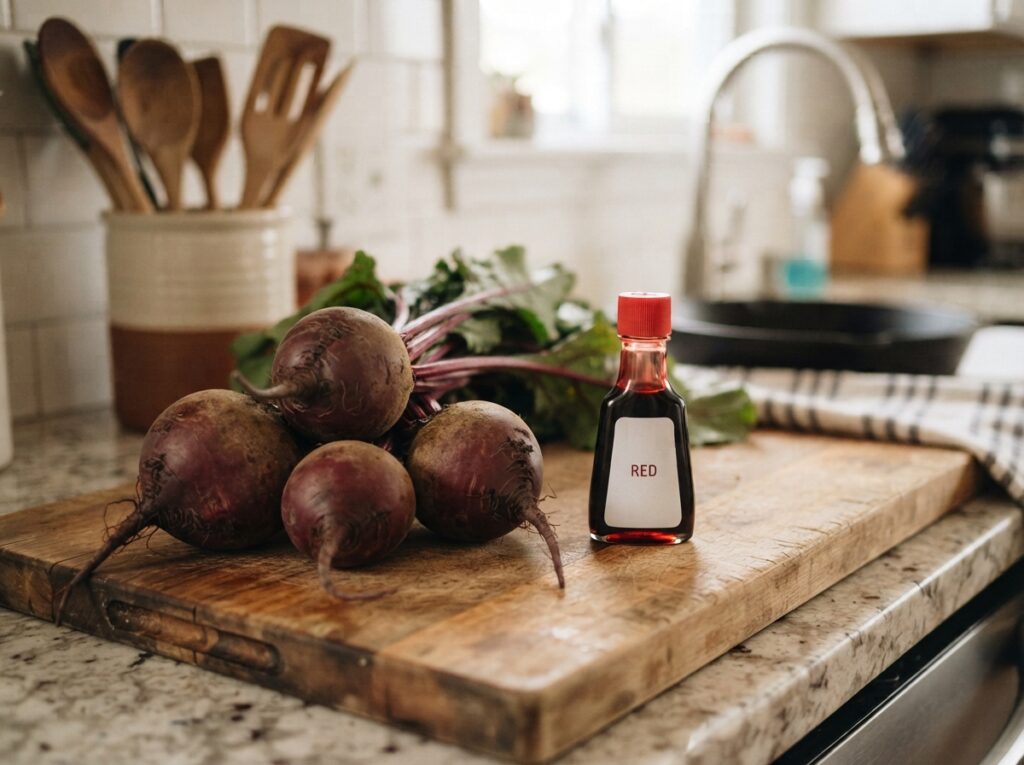
- Red & Pink: Concentrated beet juice extract.
- Yellow: Turmeric extract, calibrated to provide warm golden shades without carrying a spicy flavor.
- Green: A precise blend of turmeric, beet juice, and spirulina.
- Orange: Beta-carotene and natural carotenoids (the same compounds that give carrots and squash their color).
The Color That Proved Problematic: Where Are Blue and Brown?
If you look closely at the first batch of dye-free M&M’s, you will notice something missing: there are no blue or brown candies in the bag.
Natural blue is notoriously difficult to stabilize at scale in confectionery. While spirulina provides a natural cyan tone, early tests showed that scaling it on high-speed factory lines led to consistency issues and gummed-up machinery. Because brown shells require a touch of blue pigment in their color blend, both shades were held back while Mars continues refining the formula.
The initial dye-free M&M packages feature a four-color mix: red, yellow, green, and orange. Mars expects to solve the blue formulation and introduce all six colors by 2028.
Does It Change the Taste or the Crunch?
The biggest hurdle in reformulating an 80-year-old candy is customer expectation. During research with over 13,000 snackers, Mars found a clear line in the sand: consumers are willing to accept slightly softer or more pastel shades, but they refuse any change to flavor or texture.
The protective sugar shell still delivers its signature crisp snap, and the milk chocolate core remains completely unchanged.
A Major Shift in the Candy Aisle
Driven by increasing consumer demand for clean labels and rising regulatory scrutiny around synthetic color additives, major candy makers are taking natural alternatives seriously.
The dye-free line of M&M’s, Skittles, and Starburst launched first as online exclusives, with broader retail distribution expanding nationwide.
What’s your take? Are you eager to swap synthetic dyes for plant extracts, or will you miss having blue in the mix?