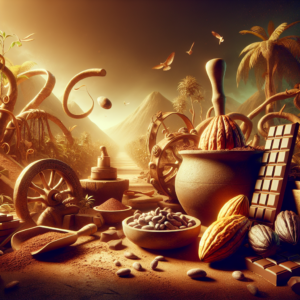
Chocolate, an indulgence enjoyed by millions across the globe, holds a rich and fascinating history that spans thousands of years. From its origins as a bitter elixir in ancient Mesoamerican civilizations to its transformation into the sweet treat we know today, chocolate’s journey through time is a tale of culture, commerce, and culinary evolution. This article delves into the chronicles of chocolate, exploring its historical significance and the pivotal moments that have shaped its current status as a beloved confectionery.
The Origins of Chocolate: A Mesoamerican Treasure
The story of chocolate begins in the tropical rainforests of Central and South America, where the cacao tree, Theobroma cacao, is native. The Olmecs, one of the earliest known Mesoamerican civilizations, are believed to have been the first to cultivate cacao, using it to create a ceremonial drink as early as 1500 BCE. However, it was the Maya and Aztec civilizations that truly elevated cacao into a cultural cornerstone.
For the Maya, cacao was a divine gift, believed to be of heavenly origin. They consumed it as a frothy, bitter beverage mixed with spices like chili and annatto, often reserved for the elite and used in sacred rituals. The Aztecs, who called it “xocolatl,” continued this tradition, adding vanilla and honey to create a rich, invigorating drink. Cacao beans were so valuable that they were used as a form of currency, illustrating the deep economic and cultural importance of chocolate in these societies.
From New World to Old: Chocolate in Europe
The arrival of European explorers in the New World marked the beginning of chocolate’s journey to Europe. Christopher Columbus is credited with encountering cacao during his fourth voyage in 1502, but it was Hernán Cortés who recognized its potential. Upon his return to Spain, Cortés introduced cacao to the Spanish court in the early 16th century.
Initially, chocolate was met with skepticism in Europe due to its unfamiliar taste. However, the Spanish soon began to modify the drink by adding sugar and cinnamon, transforming it into a sweet and luxurious beverage. This adaptation helped chocolate gain popularity among the European aristocracy, and it quickly became a symbol of wealth and status.
The Spanish maintained a monopoly on cacao trade for nearly a century, keeping the secret of chocolate’s preparation closely guarded. By the 17th century, however, chocolate had spread to other European countries, including France, Italy, and England, where it continued to evolve and gain widespread appeal.
The Industrial Revolution: Chocolate for the Masses
The Industrial Revolution of the 18th and 19th centuries brought significant advancements in chocolate production, making it more accessible to the general public. The invention of the steam engine and the mechanization of chocolate-making processes allowed for mass production, reducing costs and increasing availability.
One of the most notable innovations came in 1828 when Dutch chemist Coenraad Johannes van Houten developed the cocoa press. This device extracted cocoa butter from roasted cacao beans, leaving behind a fine cocoa powder. This breakthrough led to the creation of solid chocolate and paved the way for the development of milk chocolate when, in 1875, Swiss chocolatier Daniel Peter combined cocoa with condensed milk.
The establishment of iconic chocolate companies during this period, such as Cadbury, Nestlé, and Lindt, further contributed to chocolate’s global popularity. Their commitment to quality and innovation helped transform chocolate from a luxury item into a beloved everyday treat.
Chocolate in the Modern Era
Today, chocolate is an integral part of global culture, enjoyed in countless forms, from bars and truffles to hot cocoa and desserts. The modern chocolate industry is a billion-dollar enterprise, driven by a demand that spans continents and transcends cultural boundaries.
Despite its commercialization, chocolate production still faces challenges. Cacao farming is labor-intensive and primarily takes place in developing countries, where economic and environmental issues persist. Fair trade initiatives and sustainable farming practices have emerged to address these concerns, aiming to support farmers and protect the environment.
Additionally, the rise of artisanal and bean-to-bar chocolate makers has sparked a renewed appreciation for the craft of chocolate-making. These producers emphasize quality, traceability, and ethical sourcing, offering consumers a more intimate connection to the origins of their chocolate.
The Cultural Impact of Chocolate
Beyond its economic significance, chocolate holds a special place in cultural traditions and celebrations around the world. From Valentine’s Day and Easter to Día de los Muertos and Hanukkah, chocolate is a symbol of love, indulgence, and festivity.
In literature and art, chocolate has been immortalized as a source of pleasure and temptation. Roald Dahl’s “Charlie and the Chocolate Factory” captures the whimsical allure of a world filled with chocolate delights, while countless films and advertisements have celebrated its decadent appeal.
Chocolate’s ability to evoke emotion and create shared experiences underscores its enduring legacy as more than just a sweet treat; it is a cultural phenomenon that continues to inspire and unite people across the globe.
Conclusion
The chronicles of chocolate reveal a rich tapestry of history and culture, woven together by the threads of discovery, innovation, and tradition. From its sacred roots in Mesoamerican civilizations to its transformation into a global commodity, chocolate’s journey through time is a testament to its universal appeal and enduring significance.
As we savor each bite of chocolate, we partake in a legacy that spans continents and centuries, connecting us to those who have cherished this remarkable confection throughout the ages. Whether enjoyed as a simple indulgence or a culinary masterpiece, chocolate remains a timeless symbol of joy, celebration, and the sweet journey of life itself.
#ChatGPT assisted in the creation of this article.